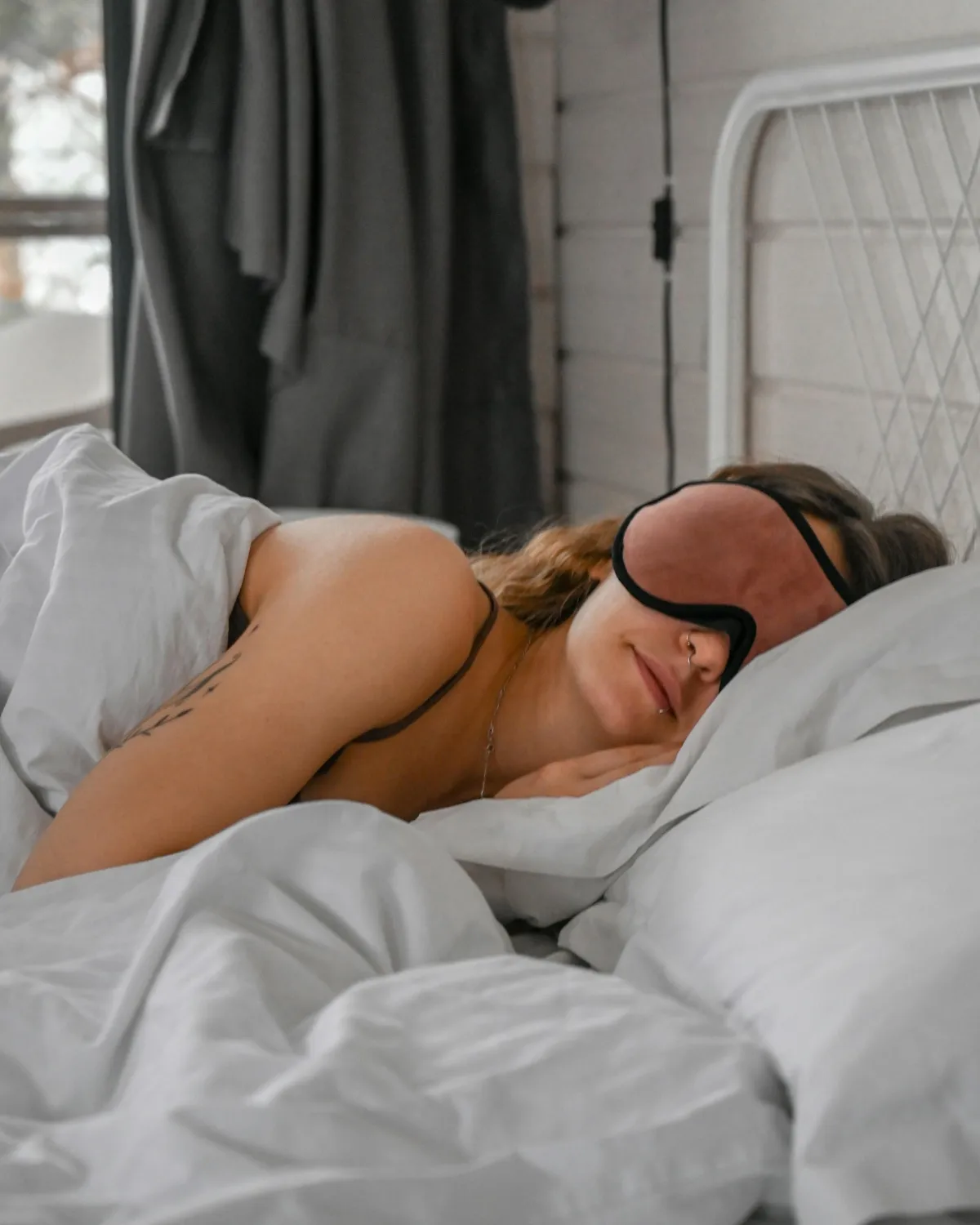
Why You're Not Losing Fat (It Might Be Your Sleep)
You hit your protein target. You got your steps in. You showed up for your strength session even though you didn't feel like it, which, let's be honest, is the actual hard part. You went to bed telling yourself you were finally getting this dialed in.
And then the scale didn't move. Or worse, you felt weaker in the gym than you did two weeks ago, despite doing everything the plan told you to do.
Most of us go straight to blaming the plan. Or blaming ourselves. Not disciplined enough, not eating clean enough, need to cut more, need to push harder. That story has been sold for decades, and it's missing something. There's a variable sitting underneath your results that almost nobody is tracking, and it doesn't fit neatly into a macro app.
It's how much you slept last night. And the night before that. And basically every night this month.
The Study That Changes How You Should Think About This
Researchers once put a group of adults on the exact same calorie deficit, twice. Once while sleeping eight and a half hours a night. Once while sleeping five and a half. Same food, same calorie restriction, same two weeks.
Both times, the scale moved by roughly the same amount. If you were only looking at the number, you'd call both attempts equally successful.
But when researchers measured what actually came off, the story split wide open. The well-rested group lost the weight mostly as fat. The sleep-restricted group lost over half as much fat, and made up the difference in muscle. Same scale number. Completely different body underneath it.
It gets more specific than that. A separate study found that a single night of zero sleep measurably reduced how much new muscle the body was building the next day, along with a real hormonal shift, cortisol up, testosterone down. One bad night. Not a rough month. One night.
It's Not Just a Willpower Problem
If your sleep has been harder to protect lately and you're in your late 30s, 40s, or beyond, there's a physiological reason for that too. Sleep disruption is one of the most common and least talked-about symptoms of the perimenopause transition, and it's driven by real hormonal shifts, not a discipline gap.
That distinction matters, because the two most common responses to feeling stuck (eat less, push harder) are exactly backwards when the missing variable is recovery. Under-sleeping while dieting doesn't just fail to help. It can actively work against the body composition result you're training for.
The Encouraging Part
Here's what's genuinely useful about this research, and not just discouraging: your body doesn't give up on you after one bad night. Studies show that a hard training session on a poorly-slept day can actually help protect the muscle-building process that sleep loss would otherwise blunt. That's not permission to treat sleep as optional. But it is a reason not to skip tomorrow's workout just because tonight's sleep falls apart.
Sleep isn't a wellness extra sitting outside your training plan. It's the mechanism your body uses to actually turn a hard workout into a real result. Treating it as optional means training hard and then walking away from the part of the process where the adaptation actually happens.
This is a preview of the science. In the full episode, Alisha breaks down exactly what the research does and doesn't support, why the popular "sleep wrecks your hunger hormones" claim is more contested than most fitness content admits, and four practical, non-negotiable habits for treating sleep as a training variable, without needing a Pinterest-perfect bedtime routine.
Listen to the full episode on Apple: Sleep and Muscle Loss, What Women Over 35 Need to Know →
Or wherever you get your podcasts
